
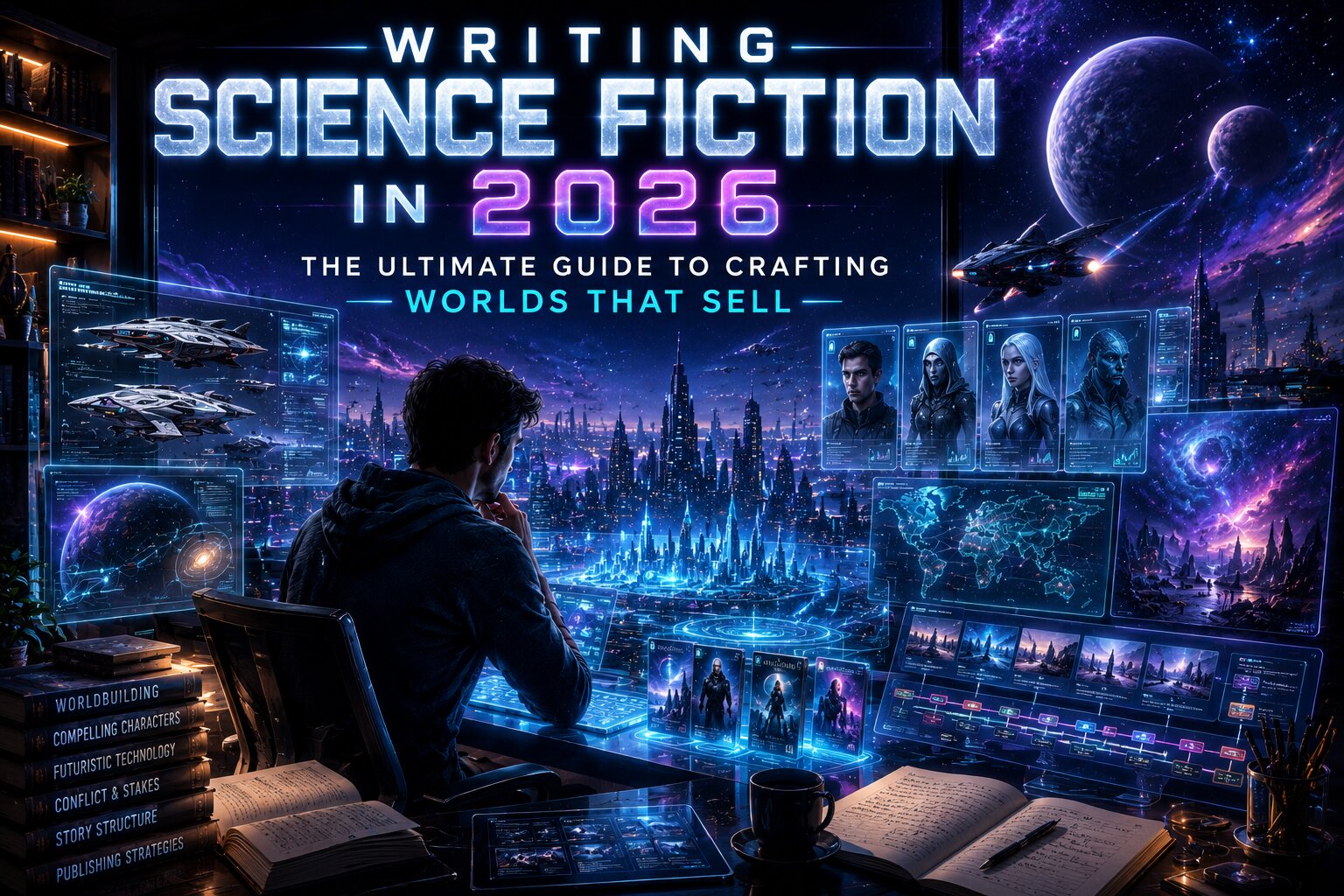
Science fiction has always been the genre that asks the questions everyone else is afraid to answer. In 2026, with artificial intelligence reshaping daily life, climate change driving real policy debates, and private space companies putting people into orbit, readers are turning to sci-fi for more than entertainment. They want a map. They want writers who can build a believable tomorrow and populate it with characters who feel the same fear, wonder, and confusion that real people feel today.
That is exactly why this guide exists. Whether you are writing your first sci-fi short story, developing a trilogy, or looking to break into professional ghostwriting for the genre, this pillar resource walks you through every essential skill. You will learn how to build worlds that feel lived in, how to handle science without boring your readers, how to spot the tropes worth subverting and the ones worth keeping, and how to choose the right publishing path for your work.
If you are a ghostwriter looking to specialize in this genre, you can explore our full ghostwriting services to see how ShadowGhostWriter helps authors bring ambitious sci-fi projects to life.
Science fiction is not a single genre anymore. It is a family of subgenres, each with its own reader base, its own conventions, and its own publishing market. Understanding where your story fits is the first step to writing something that finds its audience.
Hard science fiction has seen a resurgence as readers hungry for intellectual rigor flock to authors who take physics seriously. Soft science fiction continues to thrive in spaces where social commentary matters more than orbital mechanics. Cli-fi, science fiction centered on climate change, has grown into one of the fastest-rising subgenres of the decade. Biopunk, solarpunk, hopepunk, and AI fiction all have dedicated communities online and growing presence in traditional publishing.
Knowing your subgenre helps you set reader expectations correctly from page one. It also helps editors, agents, and indie publishers categorize your book in retail algorithms, which directly affects how many people discover it.
Readers in 2026 want science fiction that does not talk down to them. They are living through rapid technological change, and many of them are technically literate. They notice when a writer gets AI wrong. They notice when quantum computing is described as magic. And they notice when a story set in the future has the same economic and social assumptions as a story from 1985.
At the same time, readers still want the story first. Plot, character, and emotional stakes matter more than technical accuracy. The writers who succeed combine scientific plausibility with genuine narrative craft, and that combination is exactly what this guide is designed to help you build.
For writers who need support on the narrative side, our sci-fi ghostwriting service is built around exactly this balance.
Good world-building is like an iceberg. The reader sees only a fraction of what exists. Underneath the surface, you as the writer need to know everything: the economic system, the energy infrastructure, the political history, the cultural taboos, the biology of alien species, the way people communicate across distances, and a hundred other details that may never appear in the text but that give your story its sense of weight and reality.
This does not mean you need to write a thousand-page appendix before you start chapter one. It means that when you write a scene where two characters argue about money, you already know what money means in this world. When a character makes a political decision, you understand what pressures shaped that decision even if you never explain it to the reader.
1. Physical Environment
Where does your story take place? Is it a generation ship traveling between stars, a terraformed Mars colony, a near-future Earth where the coastlines have moved, or a planet orbiting a red dwarf star? The physical environment shapes everything else. It determines what resources are scarce, what the weather does to people's psychology, what the food is like, and what dangers characters face every day.
Research the actual science behind your setting. If your characters live on a planet with a different gravity, how does that affect their bodies over generations? If they live underground to escape radiation, what does that do to their sense of community and mental health? These questions are not obstacles to storytelling. They are the fuel for it.
2. Political and Economic Systems
Science fiction has a long tradition of imagining alternative ways of organizing society. Readers in 2026 are particularly interested in economic systems that differ from current models because real-world debates about automation, universal basic income, and post-scarcity economics are already happening. You do not need to write a political treatise, but your world needs a coherent answer to questions like: who controls resources, who enforces laws, and who benefits from the existing power structure.
3. Technology Level and Consistency
Your technology needs to be internally consistent. If your characters can travel between star systems in days but still communicate by leaving voice messages that take hours to receive, you need a reason for that gap. Readers will accept almost any level of technology as long as it follows its own rules and those rules are applied consistently throughout the story.
4. Culture and Social Norms
The cultures in your world should feel like they grew organically from their history, environment, and economic conditions. Avoid the trap of designing a monoculture planet where billions of beings all share the same values, fashion, and speech patterns. Real civilizations are complex, contradictory, and full of internal conflict even when facing external threats.
5. History and Mythology
Your world has a past. Even if most of that past never appears in the book, characters should carry it with them. What wars shaped current political boundaries? What disasters created current religious beliefs? What historical events are taught in schools and which are deliberately forgotten? These details give your characters depth that readers feel even when they cannot name its source.
6. Language and Communication
You do not need to invent a complete constructed language for your alien species or future humans, but you do need to think about how communication works. Who speaks which languages? Are there translation technologies? What gets lost in translation? How does language reflect the values and priorities of a culture? Even small details, like a future slang term or a formal greeting ritual, signal to readers that this world has genuine depth.
For a deeper look at how professional ghostwriters approach world-building for clients, visit our book ghostwriting page.
One of the biggest decisions you will make as a sci-fi writer is how rigorous your science needs to be. Hard science fiction writers like Kim Stanley Robinson spend years researching the actual science behind their premises. Soft science fiction writers use scientific concepts as a springboard for social and psychological exploration without worrying too much about the technical details.
Neither approach is superior. Both have produced masterpieces, and both have produced failures. What matters is knowing which approach you are taking and committing to it consistently.
You do not need to be a scientist to write science fiction. You need to be a good researcher and a careful listener. Here are the most practical research methods working sci-fi authors use in 2026:
The most reliable technique for generating plausible fictional technology is extrapolation from existing trends. Take something real and ask what it looks like in ten, fifty, or five hundred years if current trends continue. Take something real and ask what happens when one specific assumption changes.
Extrapolation works because it grounds your speculation in observable reality. Readers can follow the chain of reasoning even if they cannot verify the conclusion. That connection to reality is what creates the feeling of plausibility.
This is where many science fiction writers make their biggest mistake. They fall in love with the science they researched and try to share all of it with the reader. The result is what readers call an info dump: a long passage where the story stops moving so the author can explain how the faster-than-light drive works.
The rule is simple: explain what the character needs to know, when they need to know it, in a way that serves the scene. A pilot does not explain how their ship works to themselves while flying it. A scientist does not lecture a colleague on concepts that colleague already knows. Information should enter the story the same way it enters real life: through conversation, through necessity, through discovery.
Pro Tip: If you find yourself writing more than two consecutive paragraphs explaining your technology, stop. Find a way to dramatize that information instead. Show a character struggling with the technology rather than describing how the technology works.
A trope is a recurring element: a narrative pattern, character type, setting, or plot structure that appears frequently enough in a genre that readers recognize it immediately. Tropes are not inherently good or bad. They become problems when writers use them without thinking, and they become opportunities when writers use them with intention.
The Lone Male Genius Who Saves Everything
This trope has aged poorly. Readers in 2026 are skeptical of narratives that center a solitary white male genius who is smarter than everyone around him and whose emotional limitations are treated as acceptable collateral damage. You can keep the genius character. Make them wrong sometimes. Give them genuine blind spots. Surround them with people who are also smart and who contribute meaningfully to solving the problem.
The Monolithic Alien Culture
Real civilizations are not monolithic. An alien species that consists entirely of warriors, or entirely of scientists, or entirely of hive-mind drones reflects human thinking about the Other rather than any plausible evolutionary biology. Give your aliens internal factions, disagreements, history, and individual variation.
Technology as Magic Without Cost
In older science fiction, technology often solved problems cleanly and completely. In 2026, readers understand that technology creates new problems even as it solves old ones. Your fictional technology should have unintended consequences, resource requirements, social impacts, and failure modes.
The Post-Apocalyptic Reset to Preindustrial Life
After a civilization-ending event, survivors in fiction almost always end up farming and fighting with swords within a generation. This is not realistic. Human beings retain knowledge, skills, and social organization even through catastrophe. A more interesting post-apocalyptic scenario preserves some technology while losing other kinds, and traces exactly what survives and why.
The Evil Corporation as the Only Villain
Corporations make convenient villains but lazy ones. If your entire conflict is reducible to a shadowy megacorporation doing bad things for profit, you are leaving most of the interesting questions unasked. What does the corporation want? Who inside it is conflicted? What social conditions allow it to exist? What reforms might actually change it?
First Contact and the Weight of Meeting the Unknown
The encounter between humanity and something genuinely alien remains one of the most powerful premises in science fiction. It works because it is not really about aliens. It is about how human beings behave when confronted with the radically different. Keep this trope. Make it strange, make it uncomfortable, and resist the urge to resolve it too quickly.
The Ship as Community
Whether it is a generation ship, a naval vessel, or a smuggling freighter, the confined community is a powerful setting for human drama. The ship forces characters into proximity, creates natural hierarchies, and generates the kind of conflict that reveals character. This trope is not tired. It just needs good characters to make it work.
Time as an Enemy
Stories where the clock is running, whether through relativistic time dilation, a ticking countdown, or the slow erosion of resources on a long voyage, use the physics of their universe to create genuine dramatic tension. Time pressure is a reliable engine for plot. Science fiction's unique ability to manipulate time in interesting ways is worth preserving.
Our science fiction writing guide resources contain deeper breakdowns of trope analysis and subversion techniques for working writers.
Science fiction attracts writers who love ideas. That is the genre's greatest strength and its greatest weakness. Ideas are exciting. Characters are hard. Creating a human being on the page who feels real, whose choices feel inevitable and surprising at the same time, whose inner life the reader can access without the writer explaining it, that is a craft skill that takes years to develop.
The good news is that science fiction's unique tools make certain kinds of character development easier. You can put characters in situations that have never existed, which removes the burden of realistic contemporary detail and puts the focus squarely on how the character responds to the extraordinary.
A character who feels like they were airlifted from a contemporary thriller and dropped into your space station will undermine your world-building no matter how carefully you constructed the station. Your characters need to be shaped by their world, to take its conditions for granted the way real people take their own world for granted.
A person who grew up in a generation ship will have different spatial instincts, different anxieties, different assumptions about community and privacy than a person who grew up on Earth. Those differences should show up in how they move, how they talk, what they notice, and what they overlook.
Science fiction often requires characters who are experts in fields that the average reader is not familiar with. The temptation is to have these characters explain their expertise through dialogue. The result is dialogue that sounds like a textbook. Real experts do not explain what they know to other experts. They argue, they shortcut, they reference shared knowledge without restating it.
Write your expert characters as people who happen to know things, not as vehicles for delivering information to the reader.
Some of the best science fiction is narrated by or centered on ordinary people who are encountering extraordinary circumstances for the first time. This is a classic device because it solves the information problem naturally: the ordinary person needs things explained because they genuinely do not know, and the reader learns alongside them.
But the ordinary person protagonist can also feel passive, reactive, and underpowered. Balance this by giving your ordinary character expertise of their own, skills and knowledge that matter in the extraordinary situation, and agency that allows them to drive events rather than just witness them.
Despite decades of experimentation, the three-act structure remains the most reliable framework for novel-length fiction. Act one establishes the world, the protagonist, and the central conflict. Act two complicates everything, raises the stakes, and takes the characters to their lowest point. Act three resolves the central conflict in a way that feels both surprising and inevitable.
Science fiction does not need a different structure. It needs writers who understand how to map genre-specific elements onto this structure. The discovery of an alien artifact can be an inciting incident. The misuse of a revolutionary technology can be the second-act escalation. The decision about whether to share a dangerous discovery with humanity can be the climactic confrontation.
In the best science fiction, the central scientific or technological idea is not just a backdrop. It is the engine of the character's internal journey. What does a character learn about themselves by confronting the limits of artificial intelligence? How does living in a post-scarcity economy change what a character values? What does first contact reveal about what it means to be human?
When the science and the character arc are genuinely connected, readers experience your story as both intellectually stimulating and emotionally resonant. When they are disconnected, the science feels like decoration and the character feels like a tourist in their own story.
Pacing is where many science fiction novels lose readers. The temptation to explore every implication of a fascinating idea leads to long sections where characters sit and think, discuss, and theorize. Meanwhile, the story stops moving.
The solution is to keep your ideas in motion. Characters should encounter new information through events, not conversations. The implications of your technology should become apparent through what goes wrong, not through what characters explain. Your most interesting ideas should be dramatized, not discussed.
For writers working on longer projects, our novel ghostwriting services include structural editing support to keep your plot on track.
Traditional publishing through major imprints remains a viable and prestigious path for science fiction. The big publishers, through imprints like Tor, Del Rey, Orbit, and Ace, publish hundreds of science fiction titles each year and actively seek new voices. The path typically involves securing a literary agent who then submits your work to editors at publishing houses.
The advantages of traditional publishing include advance payments, professional editorial and design support, wide distribution, and the credibility that comes with selective gatekeeping. The disadvantages include long timelines, typically two to four years from manuscript to published book, and the significant difficulty of securing an agent in the first place.
Independent (indie) publishing has matured significantly in the past decade. Science fiction readers are particularly comfortable buying indie-published books, partly because the genre has a strong tradition of reader-driven discovery and partly because indie publishers have gotten much better at matching the production quality of traditional publishers.
The advantages of indie publishing include complete creative control, higher royalty percentages, faster time to market, and the ability to respond quickly to reader feedback and market trends. The disadvantages include bearing all upfront costs, handling your own marketing, and navigating the increasingly crowded retail landscape.
Short fiction remains an important part of the science fiction ecosystem. Magazines like Clarkesworld, Asimov's Science Fiction, Analog Science Fiction and Fact, and The Magazine of Fantasy and Science Fiction continue to publish and pay for short stories and novellas. Online publications including Strange Horizons, Beneath Ceaseless Skies, and Escape Pod serve specific niches within the genre.
Short fiction markets serve multiple purposes for science fiction writers. They are a training ground for craft development. They provide publication credits that strengthen traditional publishing queries. They are a way to build a reader base before a novel is ready. And for some writers, the short form is simply the form they love most.
Platforms like Royal Road, Wattpad, and Kindle Vella have created a market for serialized science fiction that publishes in regular installments, often weekly or bi-weekly. This model has produced some remarkably successful titles, particularly in LitRPG and progression fantasy subgenres that overlap significantly with science fiction.
Serialized publishing builds audience engagement in real time and provides immediate feedback. It also demands extraordinary discipline and a faster writing pace than most novelists are accustomed to.
Podcast fiction and full-cast audio drama have grown into legitimate publishing channels for science fiction. Platforms including Realm, Spotify, and dedicated podcast networks produce and distribute science fiction audio content. The market for audiobooks has grown every year for a decade, and science fiction performs particularly well in audio because the genre's imaginative demands benefit from strong narration.
Science fiction readers in 2026 are more diverse, more globally distributed, and more technically sophisticated than any previous generation of the genre's audience. Understanding what they expect is not about pandering. It is about communicating effectively with your actual audience.
Diversity That Feels Natural
Contemporary readers notice when a future universe is populated almost entirely by white Western characters who happen to have different hair colors. They also notice when diversity feels forced, when characters of different backgrounds are included but their backgrounds have no meaningful impact on who they are. The standard has gotten more sophisticated: not just representation but authentic representation, where a character's identity shapes their experience, their perspective, and their role in the story.
Science That Does Not Insult Their Intelligence
As noted throughout this guide, readers in 2026 are technically literate. Many of them work in technology, medicine, or engineering. Many of them have followed real-world debates about AI, gene editing, climate change, and space exploration closely enough to have informed opinions. Writing science that is obviously wrong, or that treats the reader as someone who needs basic science explained from the beginning, will lose their trust.
Moral Complexity Without Easy Answers
The clean resolution, where the hero definitively defeats the villain and the future is saved, feels insufficient to readers who are living through genuine uncertainty about the future. Contemporary science fiction readers are drawn to moral complexity, to situations where the right answer is not obvious, to characters who can be wrong about important things, and to endings that honestly reflect the difficulty of the problems being examined.
Emotional Truth Above Technical Accuracy
This might seem contradictory after emphasizing technical plausibility, but it is not. Readers will forgive technical errors if the emotional truth of the story is real. They will not forgive technical precision in a story where no one feels anything. Emotion is not the opposite of science. Emotion is the reason the science matters.
No discussion of reader expectations in 2026 can ignore the prominence of climate change as a subject. Cli-fi has moved from a niche subgenre to a mainstream concern. Readers, especially younger readers, want fiction that takes ecological collapse seriously as a setting condition rather than treating it as a backdrop detail.
This does not mean every sci-fi novel needs to be about climate change. It means that a story set in 2150 that ignores what the atmosphere looks like, where people get food, and how water is managed will feel willfully blind to readers who think about these questions in their real lives.
Ghostwriting in science fiction is more common than most people realize. Authors with compelling ideas but limited time, authors who struggle with specific aspects of craft like dialogue or pacing, authors who have written successful books in other genres and want to expand into science fiction, and creators building sci-fi intellectual properties for games, comics, or film development all work with ghostwriters regularly.
The key question is not whether you have the ideas. The question is whether you have the time, the specific craft skills, and the research capacity to execute those ideas at the level the market demands. If the answer is no in any of those areas, a professional ghostwriter is worth considering.
A professional sci-fi ghostwriter does not just write words. They research the science behind your premise, build the world to a level of internal consistency that readers trust, develop characters who feel like they belong in that world, structure a plot that keeps readers engaged through a full novel length, and write prose that matches the voice and style the project requires.
A good ghostwriter is a collaborator, not just an executor. They will ask hard questions about your premise, challenge assumptions that would undermine the story, and bring genuine creative investment to the project even though the final work will carry your name.
At ShadowGhostWriter, our science fiction ghostwriting process begins with a detailed intake interview where we learn the scope of your project, your target audience, your stylistic preferences, and the level of scientific rigor you want to achieve.
We match you with a ghostwriter whose background aligns with your subgenre. A military sci-fi project is matched with a writer who understands both military fiction and speculative technology. A first contact story goes to a writer with experience in xenobiology and anthropology as well as narrative craft.
Throughout the project, you receive regular drafts, provide feedback, and maintain complete creative control over the direction of the work. The final manuscript belongs to you entirely.
To learn more about working with us, visit our sci-fi ghostwriting services page or explore our full ghostwriting packages.
Whether you are building a personal author platform, a content site, or a ghostwriting service that targets science fiction clients, understanding which topics people are searching for and which ones have low competition is essential. This section maps out the keyword landscape for science fiction content in 2026.
World-Building Resources
Subgenre-Specific Writing Guides
Craft and Technique
Publishing and Career
Reader-Facing Topics
The most sustainable content strategy for a science fiction-focused site is to create cluster content around these keyword groups and link each cluster page back to this pillar post. Each cluster page goes deep on one narrow topic, while this pillar post provides the comprehensive overview that earns topical authority in search engines.
Science fiction in 2026 is a genre with enormous appetite and enormous competition. Readers want more of it. Publishers, platforms, and readers are actively looking for new voices. The barrier is not demand. The barrier is craft.
The writers who break through are the ones who take the genre seriously enough to do the research, build the worlds properly, develop characters who feel real, and tell stories that have something genuine to say. They are also the ones who understand the market well enough to write for specific audiences, choose the right publishing paths, and build the kind of reader relationships that turn a single book into a career.
This guide has given you the framework. The work of applying it is yours. If you need a collaborator for any part of that work, ShadowGhostWriter is here to help.
Explore our full range of services at shadowghostwriter.com, or go directly to our sci-fi ghostwriting page to start a conversation about your project.
This post is part of our complete guide: The Complete Guide to Hiring a Professional Ghostwriter in 2026
Absolutely. Ghostwriting has been a standard publishing practice for centuries. Countless bestsellers across memoir, business, and fiction have been written with ghostwriting support. What matters is that the ideas, story, and vision are yours — which is always true when you work with a professional.
Yes — many professional agencies offer flexible payment plans. Shadow Ghostwriter currently offers up to 50% off on consultation. Starting with a free consultation is the best way to understand your options without any commitment.
A standard 200-page book typically takes 2–3 months with a professional service. Larger or more complex projects with research and marketing components run 3–5 months. Rush timelines are often available at an additional cost.
With any reputable ghostwriting agency, yes — you retain 100% ownership and copyright. Shadow Ghostwriter explicitly guarantees complete content ownership in all their packages. Always confirm this in writing before signing any contract.
The most cost-effective route is a bundled agency package that includes writing, editing, and publishing. This avoids the "hidden cost trap" of hiring separately for each service — and typically delivers a higher-quality result with less friction.
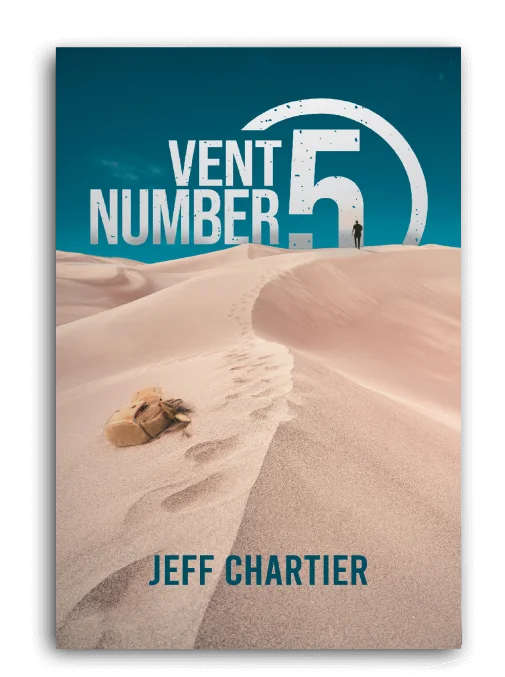
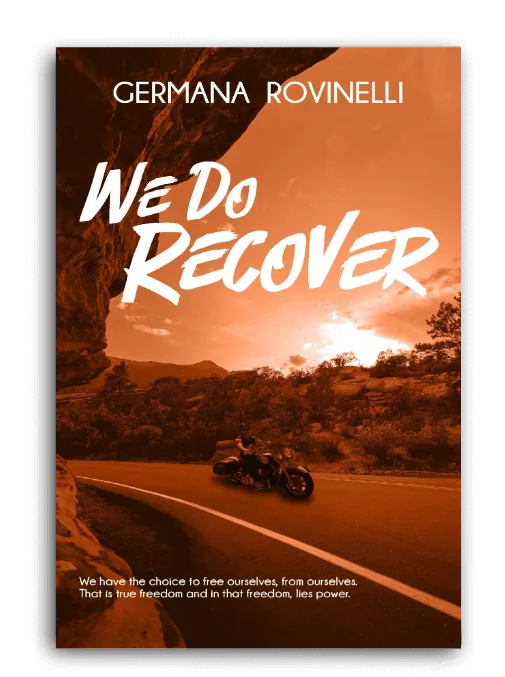
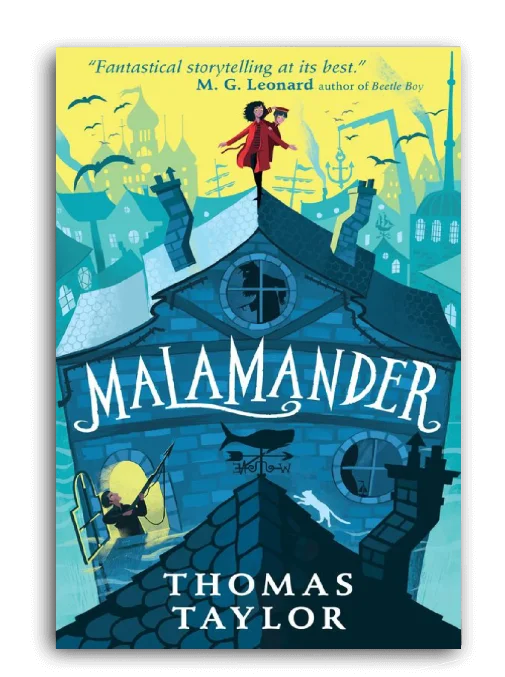
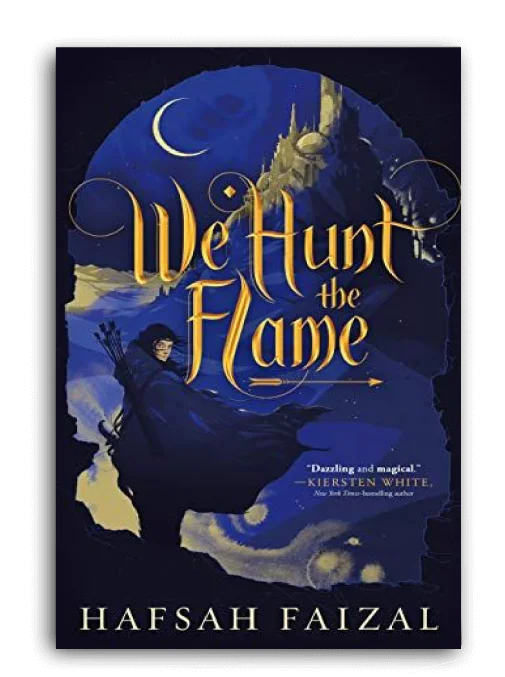
We have been able to successfully complete a number of projects of different dimensions and scopes. Business leaders, working professionals and large and small organizations are just a few of our clients. Here are some books we've written and published for our clients: