
A Behind-the-Scenes Look at the Interview and Drafting Process
It is the single most common concern every new ghostwriting client brings to their first conversation:
Will the book actually sound like me?
It is a fair question. You have spent years developing a way of speaking, thinking, and communicating that feels distinctly yours. Your cadence, your humor, the stories you reach for when making a point, the things you find frustrating or wonderful, these are not just stylistic quirks. They are the texture of your authority. And when someone else is writing your nonfiction book, the instinctive fear is that all of that gets sanded away and replaced with something generic.
The reality, when you work with a skilled professional, is the opposite. A great nonfiction ghostwriter does not impose their voice on your book. They become a kind of literary detective, studying everything about the way you communicate and then reconstructing it on the page with enough precision that even people who know you well would recognize you in every paragraph.
Here is exactly how that process works from the first interview to the final draft.
This post is part of our topic cluster on ghostwriting. For the complete overview, including costs, rights, and how to hire, read: The Complete Guide to Hiring a Professional Ghostwriter in 2026
"Voice" is one of those words that gets used constantly in writing circles but rarely defined precisely. In nonfiction, voice is not just word choice or sentence length. It is a compound quality made up of several distinct elements working together.
A professional ghostwriter's job is to understand all six of these dimensions before writing a single sentence and then to hold them in mind consistently through every chapter of your manuscript.
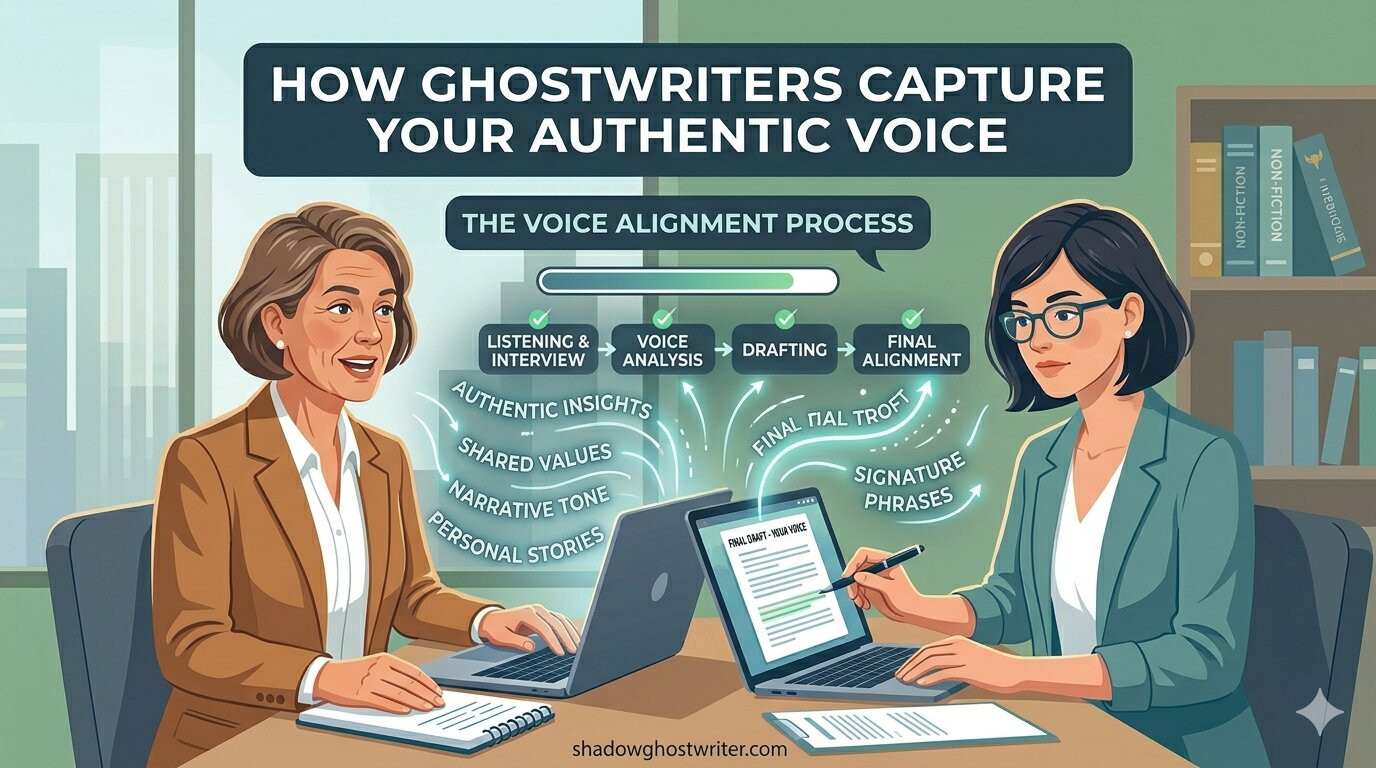
Voice capture begins not with writing, but with listening. Before a single chapter outline is sketched, a skilled nonfiction ghostwriter invests significant time in structured interviews designed to extract not just information, but personality.
These are not standard research interviews. They are voice harvesting sessions.
Depending on the scope of the project, the interview phase typically spans several sessions over one to two weeks. Each session is recorded, with the client's consent, so the ghostwriter can return to the recordings repeatedly during drafting, not just for facts but also for the exact cadence of the client's speech.
The best ghostwriting interviewers know how to ask questions that move clients away from rehearsed answers and into spontaneous, natural expression. The goal is to capture the version of you that comes out when you are not trying to sound like an author, because that is the version readers trust.
Notice what these questions have in common: they ask for stories, not summaries. They ask for emotion and conflict, not bullet points. The answers reveal far more about how a person naturally communicates than any prepared statement would.
Behind the scenes: Professional ghostwriters at agencies like Shadow Ghostwriter often conduct 8 to 15 hours of recorded interviews for a full-length nonfiction manuscript. These recordings become the raw material the writer returns to again and again to check voice accuracy during drafting.
After the interviews, the ghostwriter enters the voice mapping phase. This is the analytical work that happens before drafting begins, and it is where the difference between a competent ghostwriter and an exceptional one becomes most apparent.
A voice map is an internal reference document that the ghostwriter builds for themselves. It typically captures the following:
The ghostwriter also reviews any existing writing the client has produced, such as previous articles, blog posts, speeches, LinkedIn pieces, old essays, and internal memos. Every piece of writing in a client's own words is data about voice.
The voice map is never shown to the client. It is a working tool the ghostwriter uses to hold themselves accountable to accuracy throughout the drafting process—a way of asking, at the end of every paragraph: Does this sound like them?
One of the most valuable steps in any professional ghostwriting engagement is the sample chapter phase. Before the full manuscript is written, the ghostwriter drafts a single chapter, often the introduction or a representative middle chapter, and submits it to the client for review.
This step serves a specific purpose: it gives both parties a live test of voice accuracy before significant time and resources are invested in the full draft.
When reviewing a sample, clients are not primarily checking for factual accuracy, though that matters too. They are asking, instinctively: Does this sound like me?
Skilled ghostwriters encourage clients to mark up the sample with specific corrections rather than general impressions. 'I wouldn't use that word' is more useful than 'This doesn't feel right.' The more specific the feedback, the faster the voice calibration improves.
Most clients are surprised by the sample. The common reaction: 'This sounds more like me than I expected.' That reaction is the result of all the interview and voice mapping work that preceded the writing it does not happen by accident.
Tip: If you are evaluating a ghostwriting service, always ask whether a paid sample chapter option is available before committing to a full project. Shadow Ghostwriter offers this as part of the onboarding process for clients who want to confirm fit before a full engagement.
View Pricing and Packages: shadowghostwriter.com/pricing
Once the sample chapter has been approved and calibrated, full drafting begins. But voice capture does not end with the sample it continues as an active discipline throughout the entire drafting process.
Writing 60,000 or 80,000 words is a long project. Without deliberate systems, even talented ghostwriters can drift from a client's voice as drafting momentum builds unconsciously defaulting to their own natural style instead of the client's.
Professional ghostwriters prevent this through several specific practices:
The best ghostwritten nonfiction books are not written in a single unbroken sitting. They are built iteratively, with frequent client touchpoints that serve both as quality controls and as opportunities to re-anchor the writer in the client's voice.
After the full draft is delivered, the revision phase begins. For voice specifically, this is where fine-grained calibration happens the difference between a manuscript that sounds broadly like you and one that sounds unmistakably like you.
Clients often find this phase the most personally rewarding part of the entire process. Reading a full draft of their book for the first time, making line-level adjustments that bring the voice into sharper focus, watching their ideas take their final shape on the page.
Professional ghostwriting engagements include defined revision rounds typically two to three rounds of structured feedback and revision. At Shadow Ghostwriter, every project includes a clearly outlined revision policy in the contract so clients know exactly what is included before work begins.
There is a phrase experienced ghostwriters use among themselves: the goal is not to write for the client but to write as the client. The distinction matters. Writing for someone produces a book that captures their ideas. Writing as someone produces a book that captures their ideas in the way they would have expressed them if they had the time, the craft, and the sustained focus to write it themselves.
That second kind of book is what a skilled nonfiction ghostwriter produces. And when it is done well, readers, including people who know you personally, finish the book feeling like they have just spent hours in your company.
That is the standard Shadow Ghostwriter holds to on every nonfiction project.
Not every ghostwriter approaches voice capture with this level of rigor. Here is what to look for when evaluating whether a ghostwriting service will genuinely preserve your voice:
Questions to ask any ghostwriter: 'How do you capture my voice?' and 'Can I see a writing sample from a nonfiction project similar to mine?'
Shadow Ghostwriter's nonfiction ghostwriting team has helped hundreds of authors produce business books, memoirs, self-help titles, and thought leadership manuscripts that genuinely sound like the people behind them. Our structured interview process, voice mapping methodology, and iterative drafting approach are designed specifically to protect what makes your perspective unique.
The first step is a conversation. Book your free, no-obligation consultation today.
For a full-length nonfiction book, expect 8 to 15 hours of recorded interviews spread across multiple sessions. Short-form projects like eBooks or guides may require fewer sessions. The number varies based on how much existing material the client already has and how complex the subject matter is.
You don't need one. Every person has a communication voice in the way they speak, explain, and tell stories. A professional ghostwriter's job is to find and develop that voice for the page, even if you have never written anything formal before. Some of the best ghostwritten nonfiction books come from clients who considered themselves 'not writers.'
Polished and authentic are not opposites. A well-ghostwritten nonfiction book is cleaner and more structured than off-the-cuff speech, but it retains all the texture, warmth, and personality of the person behind it. The goal is not to make you sound like an author. It is to make you sound like yourself at your most articulate.
This is what the revision process is for. A professional ghostwriting contract includes defined revision rounds specifically to address voice calibration alongside structural and factual feedback. If the voice is significantly off in early drafts, that is useful data the ghostwriter will use your specific corrections to recalibrate before proceeding. Learn more about our process on the pricing and packages page.
Yes. Shadow Ghostwriter has extensive experience across all major nonfiction categories: business and thought leadership books, memoirs and biographies, self-help and personal development, and narrative nonfiction. Our team includes genre specialists matched to each project based on experience and fit.
Absolutely. Ghostwriting has been a standard publishing practice for centuries. Countless bestsellers across memoir, business, and fiction have been written with ghostwriting support. What matters is that the ideas, story, and vision are yours — which is always true when you work with a professional.
Yes — many professional agencies offer flexible payment plans. Shadow Ghostwriter currently offers up to 50% off on consultation. Starting with a free consultation is the best way to understand your options without any commitment.
A standard 200-page book typically takes 2–3 months with a professional service. Larger or more complex projects with research and marketing components run 3–5 months. Rush timelines are often available at an additional cost.
With any reputable ghostwriting agency, yes — you retain 100% ownership and copyright. Shadow Ghostwriter explicitly guarantees complete content ownership in all their packages. Always confirm this in writing before signing any contract.
The most cost-effective route is a bundled agency package that includes writing, editing, and publishing. This avoids the "hidden cost trap" of hiring separately for each service — and typically delivers a higher-quality result with less friction.
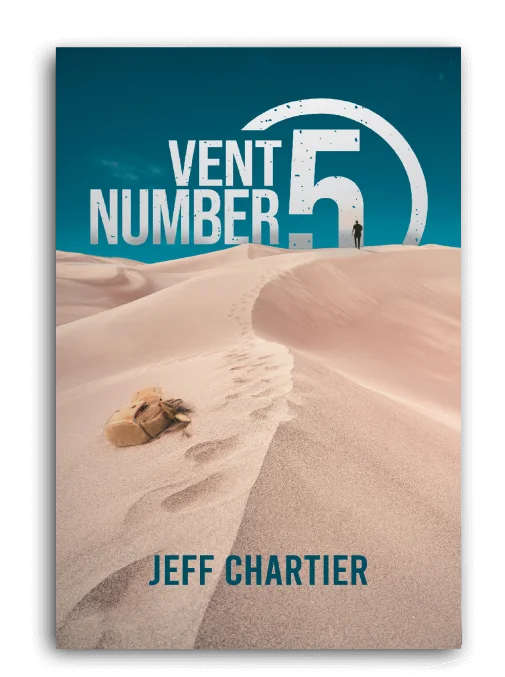
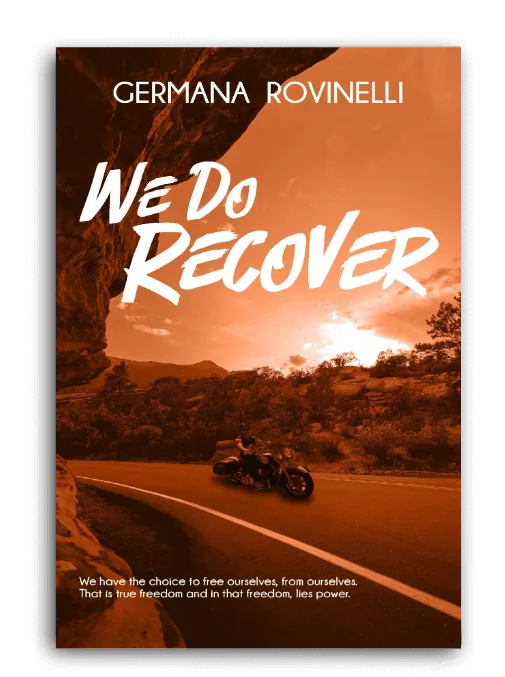
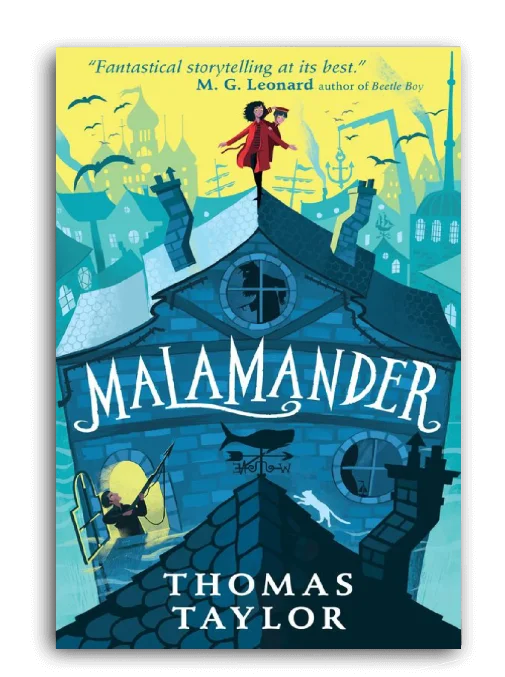
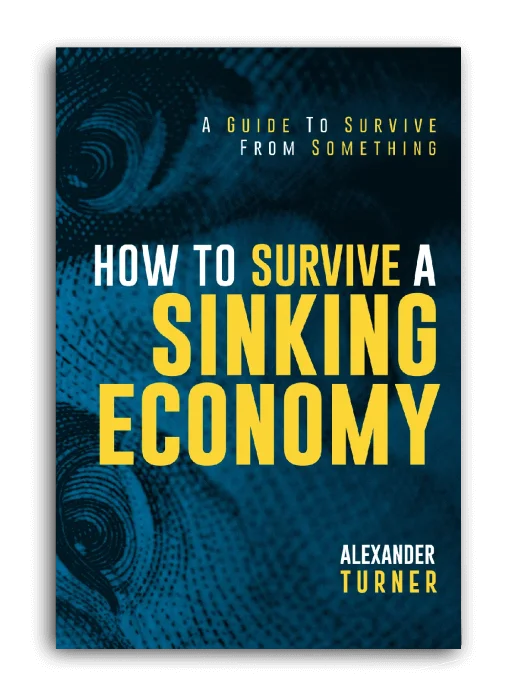
We have been able to successfully complete a number of projects of different dimensions and scopes. Business leaders, working professionals and large and small organizations are just a few of our clients. Here are some books we've written and published for our clients: